
Typing “palta” instead of “aguacate” isn’t a random choice—it’s a signal. You’re not looking for a generic avocado salad drowned in dressing. You’re chasing a very specific South American standard: clean cuts, perfect ripeness, and flavor that feels naturally rich, not engineered.
That’s where the problem begins. No matter where you are—Karachi, London, New York, or Dubai—ordering an avocado salad at a restaurant is a gamble. Too early, and it’s rubbery. Too late, and it’s brown and collapsing. Most kitchens get it wrong because avocado has a razor-thin perfection window.
This guide is your global blueprint. It strips away guesswork and shows you exactly how to find the best ensalada con palta near me, using smart search tactics, menu decoding, and visual inspection techniques that work in any city on earth.
The Vocabulary Hack: Unlocking the Right Culinary Styles
Search terms determine results. If you type “avocado salad,” you’ll get everything from creamy American-style bowls to fusion dishes with heavy sauces. That’s not what you want.
The word “palta” acts like a geographic filter. It points you toward Southern Cone and Andean cuisines, where avocado is treated with respect—minimal handling, clean seasoning, and precise cutting.
Chilean Style (The Textural Balance)
Chilean kitchens focus on contrast. The avocado is soft, but everything around it adds structure.
Look for dishes like Palta Reina, where a halved avocado is filled with chilled chicken or tuna salad. The key here is symmetry: the filling should be smooth but not mushy, and the avocado should hold its shape.
Another strong indicator is Ensalada de Apio con Palta. Crisp celery slices cut through the richness of the fruit, creating a balance that only works if the avocado is perfectly ripe.
Peruvian Style (The Citrus Elegance)
Peruvian cuisine introduces acidity as a precision tool, not an afterthought.
A classic example is Ensalada de Palmitos y Palta. Hearts of palm, red onion, and avocado cubes are lightly coated in lime juice and oil. The lime isn’t just flavor—it’s chemistry. It slows oxidation, preventing browning while enhancing the avocado’s natural oils.
You’ll notice the salad feels bright and clean, never heavy.
Andean / Southern Cone Minimalist
This is the purest form. No fillers, no distractions.
You’ll typically see thick slices of avocado layered with tomatoes and onions, dressed with vinegar and high-quality oil. That’s it. The simplicity forces the kitchen to rely on ingredient quality and knife skills.
If the avocado isn’t perfect, the dish collapses instantly—which is why this style is the ultimate authenticity test.
The Universal Restaurant Audit (How to Filter Maps & Apps Globally)
Most people fail before they even open a menu. The real skill is filtering correctly.
1. Target the Right Culinary Flags
Stop searching for “Latin food” or “Mexican restaurant.” That’s too broad.
Instead, filter for:
- Peruvian
- Chilean
- Argentine
These cuisines consistently use palta in its authentic form. Even in cities with limited South American options, these tags dramatically improve your hit rate.
2. The “Side Dish” Secret
Here’s the insider move most people miss.
In authentic Southern Cone restaurants, ensalada de palta is often not a main dish. It sits quietly under sections labeled:
- Acompañamientos
- Sides
- Ensaladas simples
Why? Because it’s designed to balance heavier foods like grilled meats or seafood.
If you only scan main courses, you’ll miss the best version on the menu.
3. Keyword Review Mining
Reviews are data—if you know what to scan for.
Use the search bar inside apps and look for words like:
- “palmitos”
- “buttery”
- “fresh cut”
- “perfectly ripe”
- “clean slices”
These are signals that the kitchen understands avocado handling.
Avoid places where reviews mention:
- “creamy dressing”
- “mashed”
- “guacamole-style salad”
That’s a completely different dish.
The Red Flags vs. Gold Standards of Restaurant Avocado
You can judge a restaurant’s entire kitchen just by how they treat avocado. It’s that sensitive.
Gold Standard
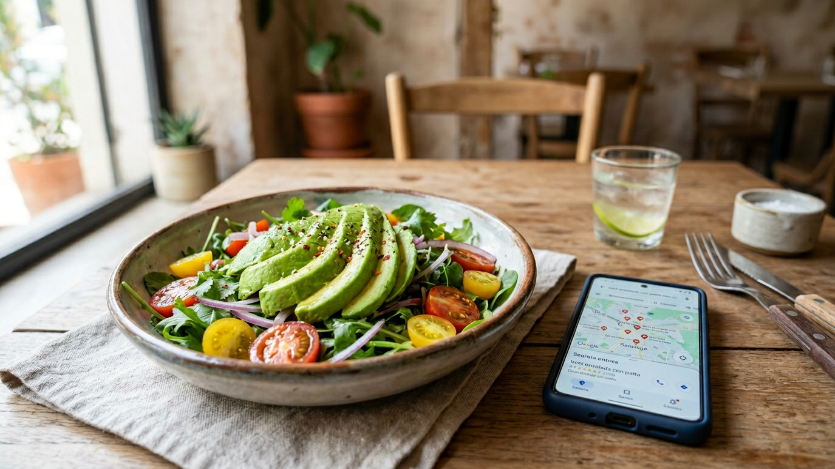
A high-level ensalada con palta has structure. The pieces are cleanly cut—either slices or cubes—and they hold their edges.
The surface should look slightly glossy, not wet. That sheen comes from fresh lime juice and olive oil, not heavy dressing. The color should be vibrant green all the way to the edges, with no browning.
This happens because lime juice slows enzymatic oxidation—the chemical reaction that turns avocado brown when exposed to oxygen. A skilled kitchen uses just enough acidity to protect the fruit without overpowering its natural flavor.
Red Flags
The moment you see mushy texture, walk away.
Brown edges mean the avocado has been cut too early—often more than a few hours before serving. That’s unacceptable in a premium kitchen.
Another warning sign is excessive dressing. Thick, creamy coatings are often used to mask poor-quality or overripe avocado. You’re no longer tasting the fruit—you’re tasting the sauce.
Finally, stringy or fibrous texture indicates the wrong variety. Authentic dishes rely on Hass avocados, known for their creamy, buttery consistency.
The Global Variety Matrix
This table helps you decode menus instantly, no matter where you are.
| Menu Item Name | Primary Country | Key Structural Ingredients | Signature Dressing Accent |
|---|---|---|---|
| Palta Reina | Chile | Halved avocado, chicken or tuna filling | Light mayo with citrus balance |
| Ensalada de Palmitos y Palta | Peru | Avocado cubes, hearts of palm, red onion | Lime juice and oil |
| Ensalada Chilena con Palta | Chile | Tomato, onion, avocado slices | Vinegar and oil |
| Palta con Camarones | Peru/Chile | Avocado with shrimp | Citrus and olive oil |
| Simple Palta Slices | Argentina | Thick avocado wedges | Olive oil and salt |
This matrix gives you a visual shortcut. If a menu matches one of these structures, you’re likely in the right place.
The “Table-Side” Check: How to Order Like a Pro
Even after choosing the right restaurant, one final move separates average from exceptional.
Ask a simple question before ordering:
“Is the avocado cut fresh to order?”
This does two things instantly. First, it signals that you know what you’re doing. Second, it forces the kitchen to confirm their process.
If the answer is yes, you’re safe. If they hesitate or say it’s pre-prepared, you already know the result won’t meet the standard.
You can go one step further and ask if they use Hass avocados. It’s a subtle but powerful indicator of ingredient quality.
The Real Strategy Behind Finding the Best Ensalada con Palta Near Me
Finding the best ensalada con palta near me isn’t about luck. It’s about stacking small advantages.
You start with the right vocabulary—palta, not avocado. Then you filter cuisines intelligently, focusing on regions that treat the ingredient properly. After that, you scan menus like an insider, knowing exactly where the dish is likely hidden.
Finally, you validate everything visually and verbally before committing.
This layered approach works anywhere. It doesn’t matter if you’re in a major food capital or a smaller city with limited options. The same principles apply because they’re built on universal truths: ingredient quality, timing, and technique.
Once you internalize this system, you stop guessing. You start selecting.
And that’s the difference between ordering an avocado salad—and finding one that’s actually worth it.
FAQs
What does “palta” mean in ensalada con palta?
“Palta” is the South American word for avocado, commonly used in countries like Chile and Peru. Using this term helps you find more authentic, region-specific dishes instead of generic avocado salads.
How do I find the best ensalada con palta near me?
Search using terms like “best ensalada con palta near me” and filter for Peruvian, Chilean, or Argentine restaurants. Also check the sides or Acompañamientos section, where authentic versions are often listed.
What makes a high-quality ensalada con palta?
The best versions use ripe Hass avocado, cut fresh with clean edges, and dressed lightly with lime juice and olive oil. The texture should be firm yet creamy, not mushy.
How can I tell if the avocado is fresh?
Look for bright green color without brown edges. Freshly cut avocado holds its shape and has a slight glossy finish from citrus and oil—not heavy dressing.
What should I avoid when ordering?
Avoid salads with thick creamy dressings, mashed avocado, or pre-mixed textures. These usually indicate low-quality or overripe ingredients.
Is ensalada con palta the same as guacamole?
No. Guacamole is mashed and heavily seasoned, while ensalada con palta focuses on sliced or cubed avocado with minimal, clean ingredients.
Can I ask the restaurant about preparation?
Yes—always ask if the avocado is cut fresh to order. This simple question helps ensure better quality and a more authentic experience.