
The Ultimate Peruvian Comfort in a Bowl
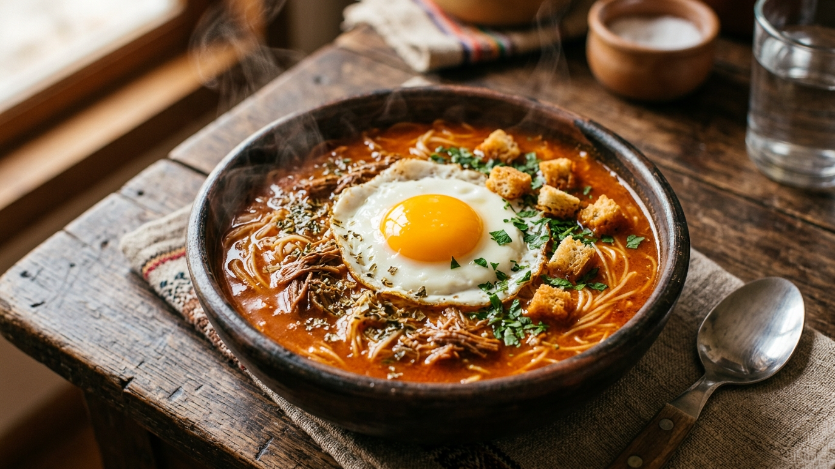
There’s something instantly comforting about a steaming bowl of Sopa Criolla, Peru’s beloved creole soup. The first thing you notice is its deep reddish-orange broth, shimmering with rich oils from ají panca paste, followed by the irresistible aroma of sautéed garlic and onions. Then comes the texture—tender strips of beef, silky angel hair pasta, and that signature swirl of evaporated milk creating a velvety finish.
But the magic doesn’t stop there. Sitting proudly on top is a perfectly fried egg, its golden yolk ready to melt into the broth, enriching every spoonful. It’s hearty, slightly smoky, subtly creamy, and deeply satisfying—everything you want in Peruvian comfort food.
If you’ve ever searched for the “best sopa criolla near me,” chances are you’re craving something more than just soup. You’re looking for warmth on a cold day, a nostalgic taste of Lima, or the perfect late-night meal that hits every note of flavor and comfort.
Anatomy of an Authentic Sopa Criolla: What Makes It “The Best”?
Understanding what separates an average bowl from an exceptional one is key when hunting for the best sopa criolla near you. This isn’t just soup—it’s a carefully layered culinary tradition.
The Aderezo Base (The Heart)
Every authentic Sopa Criolla begins with a deeply flavorful aderezo, Peru’s version of a sofrito. This base is built from sautéed red onions and garlic, slowly cooked until sweet and aromatic.
The star ingredient here is ají panca paste, which gives the soup its signature smoky sweetness and rich red color. A great restaurant will never skip or dilute this step. If the broth lacks depth or color, it’s a clear sign corners were cut.
The Protein & Pasta
The protein in a traditional bowl is usually thinly sliced or finely chopped beef—often lomo or bistec. It should be tender, juicy, and infused with the flavors of the broth.
Equally important is the pasta: delicate strands of angel hair pasta (fideos cabello de ángel). These noodles absorb the broth beautifully without overpowering it, creating that signature balance between hearty and light.
The Creamy Finish
One defining feature of this classic creole broth is its creamy touch. Authentic recipes use evaporated milk, added at the very end of cooking.
This technique creates a smooth, velvety texture without curdling. A poorly made version might taste overly milky or separated, while a great one feels rich yet perfectly balanced.
The Mandatory Garnishes
A bowl of Sopa Criolla is incomplete without its iconic toppings. The most important is a crispy fried egg (huevo frito) placed directly on top.
You’ll also find a sprinkle of dried oregano—rubbed between the hands to release its aroma—and crunchy croutons or fried bread for texture. These finishing touches are not optional; they’re essential to the experience.
How to Uncover the Best “Sopa Criolla Near Me”
Finding a truly authentic bowl requires more than just typing into Google. It’s about knowing what to look for.
Spotting Authentic Establishments
Start by searching for Peruvian restaurants takeaway, especially family-run spots or traditional eateries. Look for:
- Chicherías serving classic dishes
- Small Peruvian bistros with handwritten menus
- Established pollerías or chifas that include traditional soups
These places are far more likely to serve a genuine, homemade-style Sopa Criolla.
Decoding Online Reviews
Reviews are your secret weapon—but only if you read them strategically. Look for phrases like:
- “Rich ají panca flavor”
- “Velvety broth”
- “Perfect fried egg on top”
- “Tastes just like Lima”
Avoid places where reviews mention blandness, watery broth, or missing toppings. Authenticity always shows in the details.
Delivery App Hacks
Ordering soup for delivery can be tricky, but a few smart moves make all the difference:
- Request the fried egg separately to keep it crispy
- Ask for croutons on the side
- Reheat gently to preserve the creamy texture
These small steps ensure your soup arrives as close to restaurant quality as possible.
A Global Phenomenon: Finding Peruvian Flavors Everywhere
Peruvian cuisine has taken the world by storm, and Sopa Criolla is no exception. Even outside Peru, you can find incredible versions of this dish in cities with vibrant Peruvian communities.
In places like Miami, New York, Madrid, Santiago, and London, hidden gems serve authentic bowls that rival those in Lima. These restaurants are often run by Peruvian families who bring generations of culinary tradition with them.
The key is to explore beyond the obvious. Look for smaller, locally loved spots rather than large commercial chains. That’s where the true flavors live.
The “Backup Plan”: A Foolproof, 30-Minute Homemade Recipe
If your search for the best sopa criolla near me comes up empty, don’t worry—you can recreate this masterpiece at home.
Ingredients
- 200g thinly sliced beef (lomo or bistec)
- 1 tablespoon ají panca paste (or guajillo chili paste as substitute)
- 1 small red onion, finely chopped
- 2 cloves garlic, minced
- 2 cups beef broth
- 1 handful angel hair pasta
- ½ cup evaporated milk
- 2 eggs
- Dried oregano
- Salt and pepper
- Bread or croutons
Step-by-Step Directions
Start by heating oil in a pot and sautéing the onions and garlic until soft and fragrant. Add the ají panca paste and cook until the mixture darkens and becomes aromatic.
Next, add the beef and sear briefly before pouring in the broth. Let it simmer for a few minutes, then add the angel hair pasta. Cook until the noodles are tender but not overdone.
Remove the pot from heat and gently stir in the evaporated milk. This step is crucial—adding it off heat keeps the broth smooth and creamy.
Meanwhile, fry the eggs separately until the edges are crispy but the yolk remains soft.
The Secret Touch
Just before serving, rub dried oregano between your palms and sprinkle it over the soup. This releases its essential oils, giving your dish that unmistakable Peruvian aroma.
Top with the fried egg and croutons, and enjoy a restaurant-quality bowl at home.
Frequently Asked Questions (FAQ)
What is the difference between Sopa Criolla and Sopa a la Minuta?
While both are beloved authentic Peruvian soups, they differ in preparation. Sopa Criolla uses sliced or minced beef and is topped with a fried egg. In contrast, Sopa a la Minuta typically uses ground beef and incorporates the egg directly into the broth.
Can I make Sopa Criolla spicy?
Absolutely. While traditional versions are mildly smoky rather than spicy, you can add fresh chili or extra ají paste to increase the heat.
Is it safe to reheat Sopa Criolla if it contains milk?
Yes, but it requires care. Reheat gently over low heat and avoid boiling, as high temperatures can cause the milk to separate. Stir continuously for best results.
Conclusion: Your Next Bowl Awaits
Sopa Criolla is more than just a meal—it’s a reflection of Peru’s rich culinary heritage and its ability to transform simple ingredients into something extraordinary. Whether you’re exploring local restaurants or cooking at home, every bowl tells a story of tradition, comfort, and bold flavor.
So the next time you search for the best sopa criolla near me, don’t settle for anything less than authentic. Seek out those hidden gems, support local Peruvian chefs, and immerse yourself in one of the world’s most comforting dishes.
And if you’ve discovered an incredible spot in your neighborhood, share it—because great food is always better when it’s passed on.